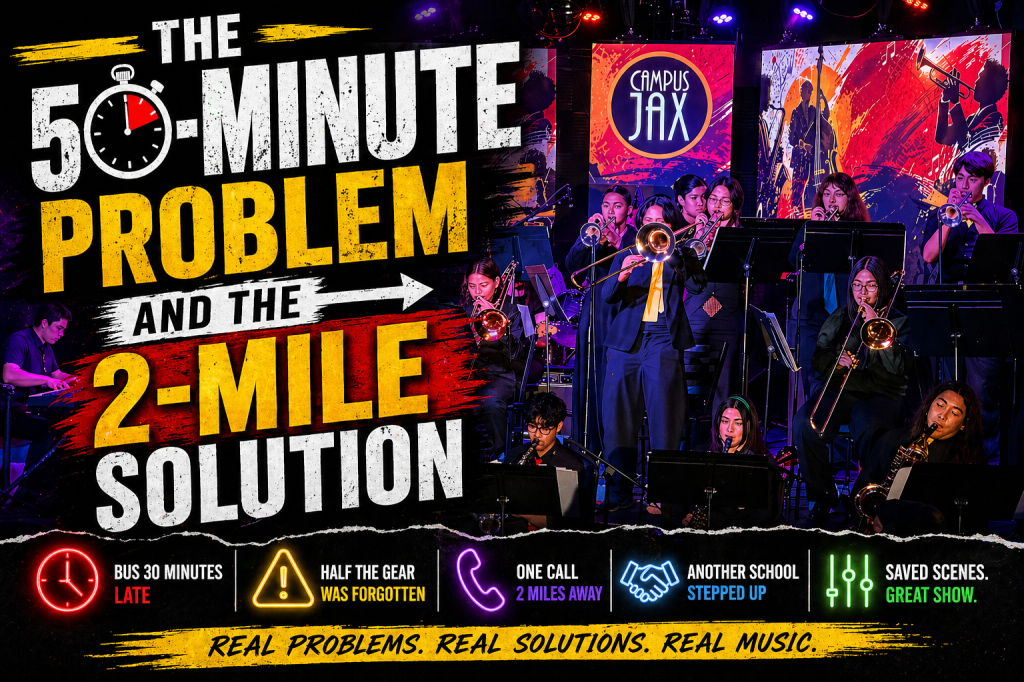
The school bus arrived 30 minutes late, and students from the Whittier Union High School District All-Star Big Band came filing out.
Like ants marching—dressed in all black—they walked in a line carrying instruments and amps, heading straight for the stage at Campus JAX.
Then reality hit.
Once they set their gear down, they realized they had forgotten:
- Music stands
- A keyboard stand
- Power cables for their amps
- Drum cymbals and hi-hat
At traffic hour, Whittier is about a 50-minute drive from Newport Beach. Going back wasn’t an option.
The band director made a call.
He reached out to a colleague at Costa Mesa High School—just 2 miles away.
And just like that…
Costa Mesa High School to the rescue!
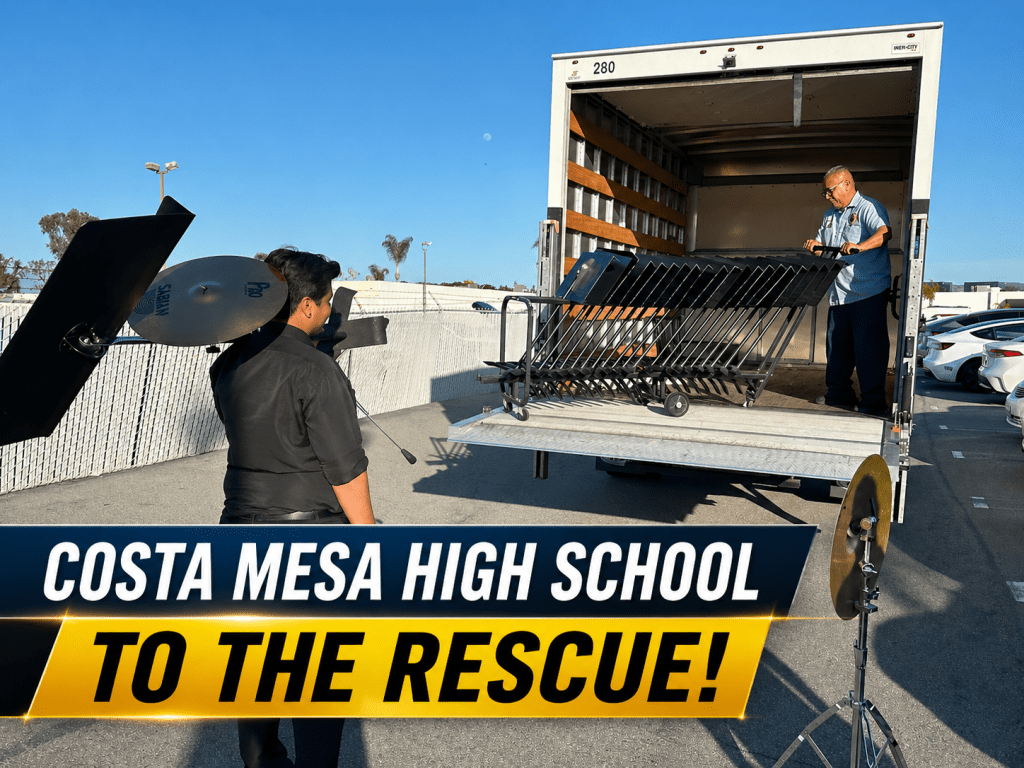
They showed up with a truck full of gear for Whittier to borrow.
“Wonder Twin High School Powers… ACTIVATE!” ✨
(If you know, you know. If not… I’m officially dating myself.)
The Whittier director was understandably frazzled and apologized for the chaos.
I told him—calmly and confidently—everything was going to be fine.
And I meant it.
My Secret Weapon: Saved Mixer Scenes
I mix quite a few big bands at Campus JAX, and the setups are usually consistent:
- 4 trumpets
- 4 trombones
- 5 saxes
- Piano, bass, drums, guitar
- 1–3 extras (like a vocalist or, in this case, vibes)
Because of that, I’ve built a go-to starting big band scene on my mixer.
A scene is essentially a saved snapshot of your entire console—gain, EQ, compression, routing, effects, fader levels… everything. It allows you to instantly recall a mix setup that you’ve already dialed in from previous shows.
Instead of starting from scratch, you’re already 80–90% of the way there.
And on this night?
That mattered—because we didn’t have a real soundcheck. Just a quick line check.
Not every engineer saves scenes, but I’ll say it straight:
It’s one of the keys to consistency—and a lifesaver when things go sideways.
Their concert turned out great!
From the very first downbeat, they were about 85% dialed in. I made a few small adjustments, and we were off.
And honestly?
They were really good—especially for a high school group.
These kids have a bright future.
Trust, But Verify
Here’s the takeaway for anyone working with high school students:
The students who loaded the bus didn’t get the job done.
No blame—just reality.
Note to anyone who works with high schoolers:
When working with student crews, make a checklist… and then double-check the checklist. 😊
From Chaos to Showtime
At the end of the day, this is what live sound is all about—real people, real problems, and real-time solutions. No amount of planning can eliminate every curveball, but experience gives you the tools to handle them when they come. A delayed bus, missing gear, no soundcheck… on paper, this one had disaster written all over it. But with a calm approach, a solid system in place, and a little help from the community, it turned into a great show. That’s the goal every time—not perfection, but being ready when things go sideways.
Here’s a short clip from their performance.
 Soundcheck Diaries
Leave a comment