I love music production, live audio, and mixing bands. It’s like creating a sonic landscape—shaping tone, balance, and space in real time. But I’m also involved in a very different side of audio production: the corporate events world. It’s not nearly as creative as mixing live music, yet there’s never a dull moment. Corporate events keep me on my toes and constantly moving, solving problems that require a different kind of precision.
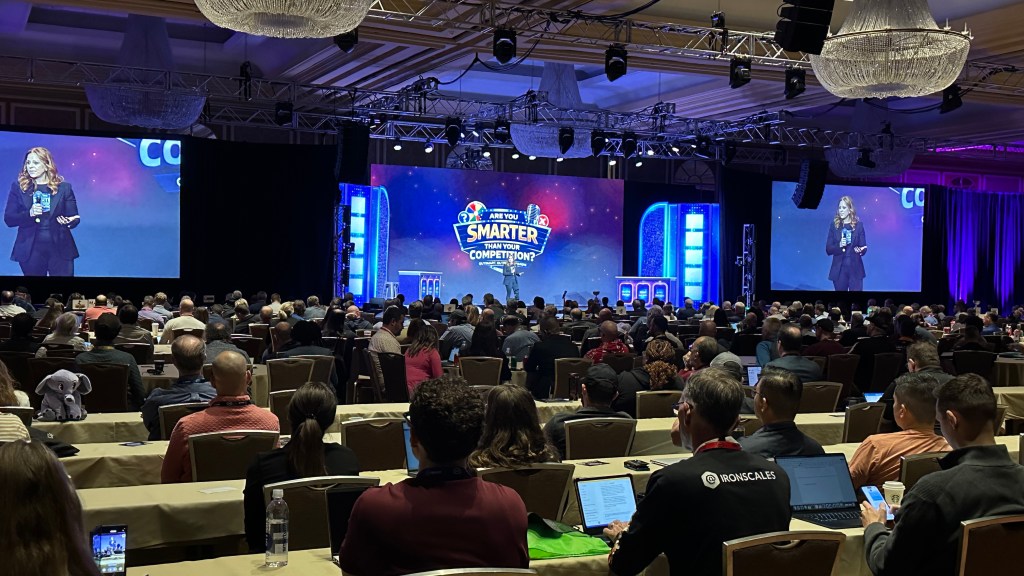
At a corporate event I worked in Dallas, we had a large general session room along with nine breakout rooms. In addition to live sound reinforcement, every space was being live streamed simultaneously—and recorded as well. Each member of our production team had a clearly defined role. My responsibility was to manage the setup and deployment of all audio in the nine breakout rooms. That included setting up mixers, tuning the rooms, verifying speaker deployment, establishing proper gain structure throughout each system, and coordinating wireless frequency deployment based on the plan provided by our RF manager. Across all the breakout spaces, we were managing 56 wireless frequencies that had to coexist cleanly.
In an ideal world, each transmitter—whether handheld or lavalier—and its corresponding receiver would be assigned to its own dedicated channel on the mixer, just like we had in the large general session room. This allows each microphone to be EQ’d individually and optimized for clarity, tone, and feedback stability.
In the breakout rooms, however, we didn’t have that luxury. Several of the spaces had only four receivers feeding four mixer channels, yet they needed to support seven to eight handheld wireless mics and/or lavaliers—depending on the configuration the client requested at any given time. For example, we might have one handheld and three lavs on stage, or one handheld and two lavs on stage with an additional handheld roaming the room for audience Q&A, etc.
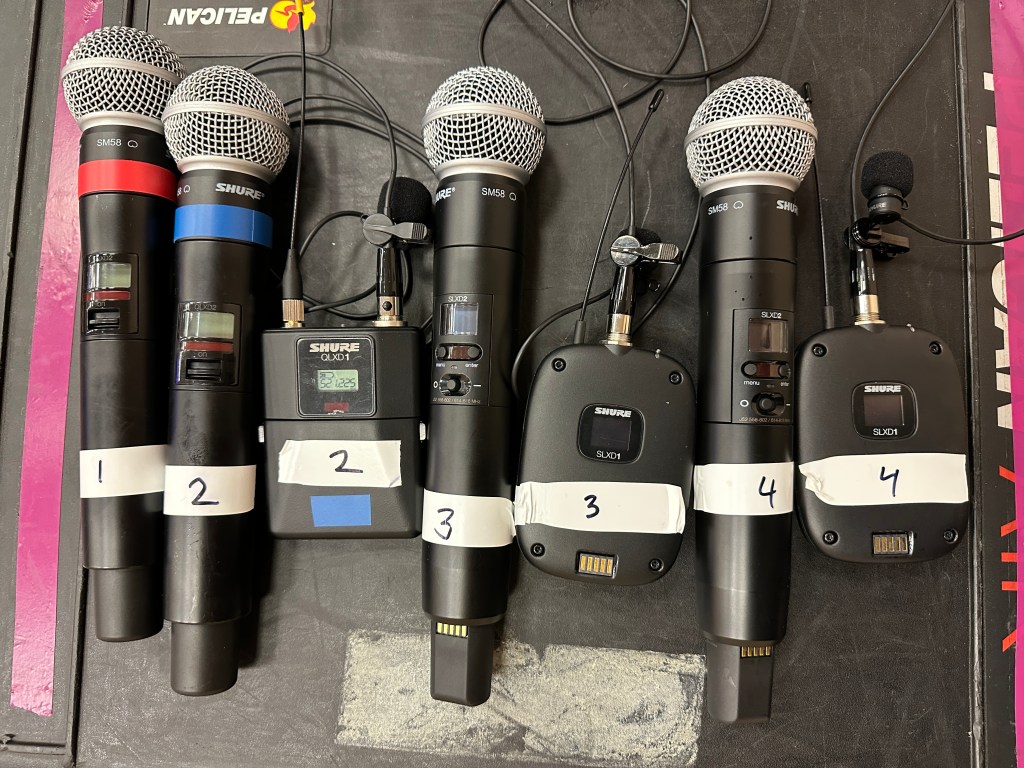
This setup was far from ideal and carried the potential for some real “oh-crap” moments. Nevertheless, these were the resources I was given, and it was my job to find a way to balance stability with intelligibility.
Making It Work in the Real World
Challenge:
Because lavalier microphones are typically omnidirectional and positioned several inches from the sound source—the presenter’s mouth—they offer much less gain before feedback than handheld microphones.
Solution:
I created a subgroup and routed all the shared wireless microphone channels which included the lavs through it. Using an RTA on my iPad, I stood in the presenter’s position wearing a lav and rang out the system. Ringing out with a subgroup means identifying and gently notching the frequencies most prone to feedback before the microphones are used in the event, increasing overall stability while leaving the rest of the mix untouched.
Challenge:
Lavs require significantly more gain than handhelds because of their distance from the mouth. However, these microphones were sharing the same preamp gain, making it difficult to balance their levels.
Solution:
I adjusted the gain sensitivity on the transmitters themselves—both handhelds and lav packs. I then checked each mic individually until the mixer’s meters showed they were hitting at roughly the same level. This allowed me to keep the shared preamp gain in a usable range for both.
Challenge:
When two transmitters share the same frequency, leaving both powered on can cause interference. The receivers may struggle to determine which signal to follow, resulting in dropouts, noise, or unpredictable audio behavior.
Solution:
When sharing two wireless transmitters on one frequency, it’s critical that only one is powered on at a time. I made sure to remind the breakout room operators of this and emphasized turning off unused transmitters.
Challenge:
Even after notching problematic frequencies from the omnidirectional lavs, having multiple microphones open at once still increased the potential for feedback—especially when several presenters were active simultaneously.
Solution:
I engaged the automixer. The majority of digital mixers have this feature. A gain-sharing automixer automatically lowers the level of microphones that aren’t in use while allowing the active mic to come forward. This reduces the total system gain and significantly improves feedback stability. I was super thankful for that automixer whenever the room monitors passing a handheld to audience members during Q&A were walking directly in front of the main loudspeakers.
In the end, it wasn’t about having the perfect setup—it was about making smart decisions with the tools available and delivering clear, stable audio under less-than-ideal conditions.
Final Thoughts
Moments like these are a good reminder that great live sound isn’t always about having the best gear—it’s about making smart decisions with the gear you have. When you approach challenges with a problem-solving mindset, even less-than-ideal configurations can deliver professional results.
And sometimes, the biggest wins in live sound come not from perfect setups—but from successfully navigating the ones that make you think, “Seriously?”



 Soundcheck Diaries
Leave a reply to otherwillsmith Cancel reply